
Here’s what we’d do
Draw them, note what makes each distinctive and assemble a small booklet. Choose a handful of familiar public objects such as doors, benches or trees. Label observations as personal notes rather than authoritative species or historical identification.
How to make it happen
Go at your own pace.
- Before the link
Set up the part that matters
Choose a handful of familiar public objects such as doors, benches or trees.
- Together
Keep the shared activity simple
Draw them, note what makes each distinctive and assemble a small booklet.
- At the agreed finish
Leave room for the rest of the day
Give unfinished work a way to travel home and return borrowed tools before leaving.
Choose your version
A few things to know
Use existing materials; agree on extras first
Use existing materials; agree on extras first. Confirm the total for the version you choose, including travel and any optional extras. No price, ticket or reservation is included.
Is this your kind of plan?
Create a field guide to objects in one room. Label observations as personal notes rather than authoritative species or historical identification.
- Label observations as personal notes rather than authoritative species or historical identification.
- Agree on the date, exact meeting point or call link, and spending before anyone books or buys.
If the first version doesn't fit
Create a field guide to objects in one room.
The detail to settle first
Label observations as personal notes rather than authoritative species or historical identification.
Keep a good idea
Good idea. Maybe later?
Save it for your people, or choose when to revisit it.
Bring this back on a date
We’ll show it when you return to this browser. This doesn't send an email or notification.
Who’s up for this?
Suggest a time
A hand-drawn neighborhood field guide
- When
- Choose a time together
- Spending
- Use existing materials; agree on extras first
Review before inviting. Nothing sent or booked. Organizer access required.
Or share a message in your chat
No account needed. You choose who gets it.
Friends reply in your chat. This link opens the guide, not a poll.
Good questions
How do we get this plan started?
Choose a handful of familiar public objects such as doors, benches or trees. Draw them, note what makes each distinctive and assemble a small booklet.
What can we do if the original version is too much?
Create a field guide to objects in one room.
What should we check before inviting everyone?
Label observations as personal notes rather than authoritative species or historical identification.
About this plan
This is an original Hang Later planning template. Example budgets are suggested limits, not quoted prices or measured savings.
How we research and maintain these plans ↗
About the images
Venue images are archival photographs, not today’s conditions. Other photographs illustrate the activity and don't show a named venue.
A blank sketchbook beside brushes and watercolor paints · illustrative photograph. Tim Arterbury ↗ · CC0. Resized and cropped for display; the image retains this license.
A palette of mixed bright paints · illustrative photograph. Mike Petrucci mikepetrucci ↗ · CC0. Resized and cropped for display; the image retains this license.
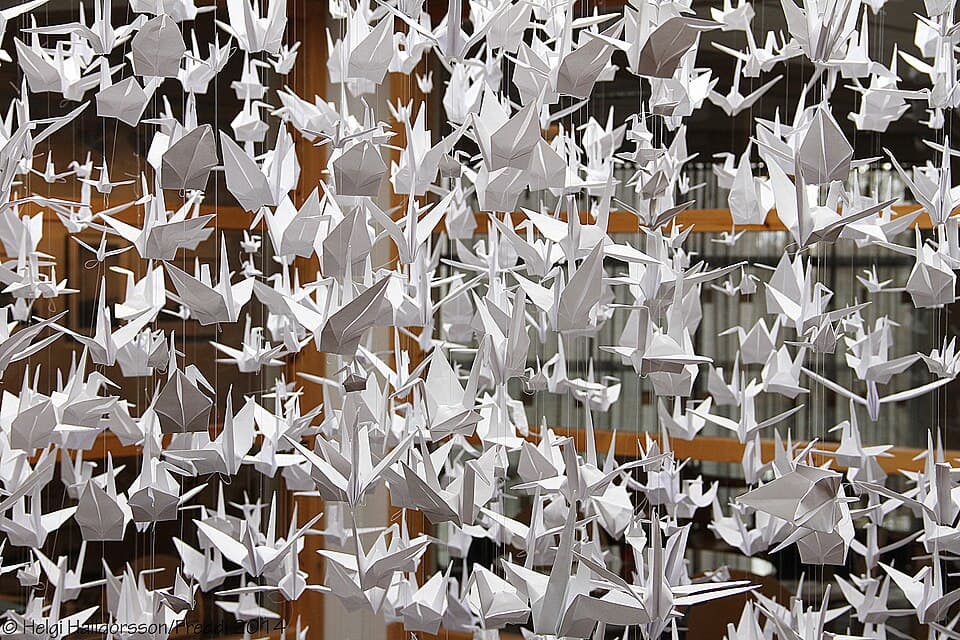
Paper origami cranes suspended together · illustrative photograph. Helgi Halldórsson from Reykjavík, Iceland ↗ · CC BY 2.0. Resized and cropped for display; the image retains this license.